
May 13, 2026
The 2026 Guide to Automatic Drip Coffee Bag Packaging Technology: Maximizing Efficiency and Aroma Preservation
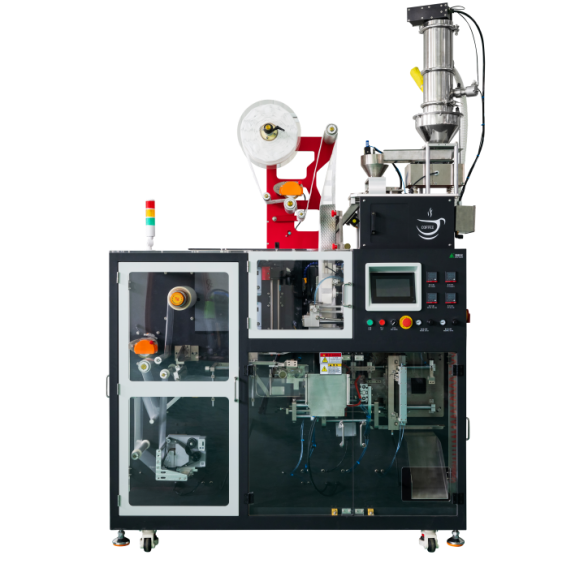
Table of Contents
1. Why Drip Coffee Packaging Demands a Rethink in 2026
2. The Landscape: A Market on Fast-Forward
3. Ultrasonic Sealing: The Core of Aroma Protection
4. Nitrogen Flushing and Vacuum Packaging: Building the Oxygen Barrier
5. Speed and Efficiency: What Modern Automated Machines Deliver
6. Ear-Hook Coffee Bags: The Format Driving Demand
7. Comparison Table: Key Technologies at a Glance
8. Building an Integrated Packaging Line: What to Consider
9. The Future: What's Coming After 2026
10. Final Recommendations
1. Why Drip Coffee Packaging Demands a Rethink in 2026
The drip coffee bag market is not just growing—it´s transforming what consumers expect from a single-serve coffee experience. Globally, the drip bag coffee market was valued at roughly US$2.67 billion in 2025 and is projected to reach approximately US$4.12 billion by 2032, expanding at a CAGR of 6.4%. Production volume tells a similar story: approximately 2.46 billion packs were produced in 2025 alone, at an average market price of around US$1.05 per pack.
Behind those numbers sits a packaging challenge that many roasters and co-packers underestimate. You can source exceptional single-origin beans, roast them to perfection, grind them with precision—and then lose half your aroma in the first week because of a compromised seal. The packaging line, not the roaster, becomes the weakest link.
So what´s changed in 2026? Three things. First, ultrasonic sealing has matured enough to become the default standard for serious drip coffee producers, offering cold, clean seals that don´t cook delicate coffee oils. Second, nitrogen flushing integration is now available on mid-range machines—not just million-dollar lines. Third, the market is demanding aroma-preserving packaging that keeps volatile compounds intact for months, not weeks. This guide breaks down the technology, the trade-offs, and the equipment decisions that matter most.
2. The Landscape: A Market on Fast-Forward
The global drip coffee bag packing machine market was valued at roughly US$150 million in 2024 and is projected to reach US$300 million by 2033, growing at a CAGR of 8.5% from 2026 onward. That´s a doubling in under a decade.
What's fueling this? The relentless shift toward single-serve, ready-to-brew formats. Drip coffee bags eliminate the need for brewing equipment and deliver a freshly ground coffee experience in seconds—exactly what busy consumers want. This convenience factor, combined with rising specialty coffee culture, has pushed coffee roasters and food manufacturers to invest heavily in automated packaging solutions that guarantee consistency and freshness at scale.
On the broader machinery front, the global packaging machinery market is climbing from approximately US$65.4 billion in 2025 to US$69.7 billion in 2026, with the food and beverage segment remaining a core growth driver. The trajectory is clear: automation is no longer optional for brands that want to compete on quality and shelf life.
3. Ultrasonic Sealing: The Core of Aroma Protection
Here´s a hard truth most spec sheets don´t emphasize enough: traditional heat sealing can damage the very product you´re trying to protect. Heat seal jaws typically run at 160–260°C (320–500°F)—enough to scorch fine coffee grounds near the seal area, degrade volatile oils, and introduce flat, stale notes before the package even leaves the factory. Worse, grounds caught in the seal zone create micro-leak pathways that oxygen exploits relentlessly.
Ultrasonic sealing works differently. Instead of applying external heat, it uses high-frequency mechanical vibration to generate localized frictional heat precisely at the seal interface—and nowhere else. The result?
l Cold bonding. The seal forms without cooking the coffee. Aromatic compounds stay intact. The consumer opens a bag that smells like freshly ground beans, not scorched dust.
l Grounds-tolerant sealing. Even if coffee powder residues sit in the seal area, ultrasonic vibration displaces them before forming a tight, hermetic bond. Traditional heat sealing can´t do this—the residue blocks fusion and creates invisible pinholes.
l Lower energy consumption and less scrap. Ultrasonic systems use energy only during the brief sealing pulse, not continuously to maintain jaw temperature. Scrap rates drop because inconsistent heat-seal failures are virtually eliminated.
·
A 2025 industry analysis reported that ultrasonic sealing preserves coffee aroma retention above 95%, with leak rates below 0.01 cc/min in capsule top-weld applications—numbers that translate directly to shelf-life claims and customer satisfaction.
4. Nitrogen Flushing and Vacuum Packaging: Building the Oxygen Barrier
Even the best ultrasonic seal can´t protect coffee from the oxygen trapped inside the package at the moment of sealing. That´s where gas flushing and vacuum packaging enter the equation.
How nitrogen flushing works. Just before sealing, the machine injects nitrogen—an inert, odorless, tasteless gas—into the package headspace, displacing oxygen. Nitrogen doesn´t react with coffee solubles; it simply pushes oxygen out. The result: residual oxygen levels below 1%, sometimes under 0.1% in high-end lines. This single step can extend shelf life from weeks to up to six months for unopened packages, preserving flavor and aroma far beyond what standard packaging achieves.
The vacuum packaging alternative. For certain formats—particularly pre-ground coffee packs—vacuum sealing removes almost all air entirely. However, fresh roasted coffee presents a complication: it releases CO₂ for days after roast. Vacuum-sealing too early creates ballooning packs as CO₂ off-gasses. Many roasters wait 5–7 days for degassing before vacuum packing, during which aroma loss already begins. Nitrogen flushing with a one-way valve largely sidesteps this problem, allowing packaging immediately after roasting while letting excess CO₂ escape without letting oxygen in.
Modern automatic drip coffee packaging machines increasingly integrate nitrogen flushing as a standard or optional module, making this once-premium preservation method accessible to mid-volume roasters.
5. Speed and Efficiency: What Modern Automated Machines Deliver
Speed claims without context are meaningless. Here´s what current-generation equipment actually delivers in production environments:
Entry-level to mid-range machines typically run 30–40 bags per minute (approximately 1,800–2,400 bags/hour). These units handle inner bag forming, dosing, ultrasonic sealing, and optional outer envelope packaging. They suit smaller roasters scaling up from manual or semi-automatic lines.
High-speed integrated systems push 50–80 bags per minute (3,000–4,800 bags/hour). At the upper end, for instance, certain models achieve approximately 3,300–3,900 bags per hour with integrated ultrasonic inner bag sealing, heat-sealed outer envelopes, and optional nitrogen flush capability.
What does this mean in practical terms? A single high-speed line producing 3,600 bags/hour running one shift (8 hours) yields roughly 28,800 finished packs per day. Over a 250-day production year, that´s over 7 million packs—enough to supply a national retail chain or a major e-commerce operation.
The real coffee packaging efficiency gain isn´t just raw speed—it´s the elimination of downstream waste. When ultrasonic sealing cuts reject rates, and nitrogen flushing extends shelf life, overall throughput-per-saleable-unit rises significantly, even if the machine´s nameplate speed stays unchanged.
6. Ear-Hook Coffee Bags: The Format Driving Demand
Walk through any Asian convenience store or browse a specialty coffee e-commerce site, and you´ll see them: ear-hook coffee bags—single-serve filter pouches with fold-out paper handles that rest on the rim of a cup. The consumer simply tears open the outer envelope, hangs the inner filter bag over a mug, and pours hot water through.
This format has exploded because it delivers a pour-over experience without equipment. For coffee brands, it´s an ideal product: lightweight, shelf-stable, and premium-positioned. Average retail pricing around US$1.05 per pack creates attractive margins while remaining affordable to consumers.
Packaging ear-hook bags, however, demands specialized machinery. The inner bag—typically made of non-woven fabric, PET mesh, or corn-fiber filter material—requires ultrasonic sealing because heat alone won´t bond non-woven materials cleanly without burning. The outer envelope, usually a laminated film (aluminum foil, VMPET, or kraft paper composites), is heat-sealed for a flat, easy-tear finish. Fully automatic drip filter coffee bag cartoning machines now handle inner bag forming, filling, ear-hook die-cutting, ultrasonic sealing, outer envelope wrapping, and date/lot coding in a single continuous flow.
7. Comparison Table: Key Technologies at a Glance
Technology | Primary Function | Impact on Aroma | Impact on Efficiency | Typical ROI Timeline |
Ultrasonic Sealing (Inner Bag) | Cold-welds filter material without heat degradation | Preserves >95% volatile aromatics; eliminates scorched notes | Reduces reject rates; eliminates jaw-cleaning downtime | Immediate—scrap reduction covers costs within months |
Nitrogen Flushing (Outer Envelope) | Displaces oxygen in headspace; residual O₂ <1% | Extends fresh aroma phase up to 6 months unopened | Minimal speed impact when integrated; adds ~$0.04/pack | <12 months for premium brands selling on freshness claims |
Vacuum Packaging | Removes ambient air entirely before sealing | Protects against oxidation but requires degassing wait period | Degassing delay slows overall production cadence | Longer—better suited for pre-ground or aged coffee formats |
Heat Sealing (Outer Envelope) | Bonds laminated film layers via thermal fusion | Residual risk of plastic off-odors competing with coffee aroma | Mature, reliable; compatible with most composite films | Baseline—essentially universal, no additional premium |
Dual-Chamber Packing (Inner + Outer) | Integrates inner filter bag and outer envelope in one pass | Maximum protection via two-stage barrier | 50–80 bags/min in single-line configuration | 12–18 months for medium-to-large roasters |
8. Building an Integrated Packaging Line: What to Consider
Automation level. Semi-automatic machines work for startups doing 500–1,500 bags/day. But once you cross roughly 5,000 bags/day, fully automatic drip coffee bag packing machines with PLC controls and touchscreen interfaces become economically unavoidable—labor costs for manual feeding and inspection eat margins alive at scale.
Integration with upstream processes. A well-designed line connects grinding, dosing, and packaging seamlessly. Modern automatic dosing systems achieve accuracy within ±0.1–0.5g for ground coffee, ensuring every bag delivers consistent brew strength. Material handling matters too: ground coffee needs enclosed screw conveyors or vacuum loaders to prevent moisture absorption and dust contamination.
Material compatibility. Not all sustainable films weld cleanly with heat. Ultrasonic sealing supports PLA pods, paper-based drip filters, and mono-material sustainable films that heat sealing struggles with—a crucial advantage as environmental regulations tighten.
Format flexibility. The machine should handle inner bags (74–90mm width), produce consistent ear-hook folding, and optionally wrap in outer envelopes with nitrogen flush. Quick-change tooling for different bag sizes and ear widths cuts downtime between SKU changes. A good metric: changeover under 30 minutes between significantly different formats.
9. The Future: What's Coming After 2026
If the current trajectory holds, several developments will reshape drip coffee packaging in the next 3–5 years:
l Valve-free degassing via ultrasonic micro-channels. Emerging technology forms microscopic degassing pathways directly within the seal itself—eliminating the need for plastic one-way valves entirely, reducing cost and improving recyclability.
l Smart packaging integration. Expect QR-code-linked freshness tracking, oxygen indicator labels, and blockchain-verified origin data becoming standard on premium drip coffee packs.
l Biodegradable materials at scale. Over 50% of coffee packaging machines are predicted to use biodegradable materials by 2026–2027, driven by regulation and consumer demand.
l AI-driven quality control. Vision systems and machine learning algorithms that detect seal defects, weight deviations, and label misalignment in real time—reducing human inspection dependency.
10. Final Recommendations
If you´re specifying packaging equipment in 2026, three principles should guide your decision:
Prioritize ultrasonic sealing for any product contact seal. The aroma preservation advantage over heat sealing is measurable and commercially significant—especially for premium and specialty coffee brands where flavor integrity defines brand value.
Integrate nitrogen flushing from day one if shelf life claims matter. The per-unit cost is minimal (approximately $0.04 per pack), and the extended freshness window opens retail channels that demand longer shelf life.
Plan for throughput, but buy for flexibility. A machine rated 60 bags/minute sounds impressive, but if format changeovers take four hours and waste a shift´s worth of production, your effective throughput drops sharply. Look for recipe memory, quick-release components, and tool-less adjustments.
The drip coffee bag market is growing at 6.4% annually. The packing machinery segment is growing even faster at 8.5%. The brands that invest in aroma-preserving, high-speed, automated packaging now are the ones that will meet consumer expectations when the category matures—and capture the margin that comes with it.
Related articles
May 13, 2026
Why does your coffee packaging machine always 'jam the bag'? The precision difference between servo film transmission and mechanical transmission is 0.1mm, resulting in a tenfold difference in failure rate.
May 13, 2026
The 'Freshness Battle' of Coffee Packaging: How a One-Way Degassing Valve Extends Coffee Bean Shelf Life from 3 Months to 18 Months?
The 'Freshness Battle' of Coffee Packaging: How a One-Way Degassing Valve Extends Coffee Bean Shelf Life from 3 Months to 18 Months?